Translate

Tuesday, 8 October 2013

Australian best snacks

When you were back home ready to come to Australia, if you met somebody who had visited Australia and found out you were going too, there’s a good chance they asked you this:“Can you pick me up some Tim Tams?"
 Tim Tams are Australia’s favourite and much loved chocolate biscuit made up of two layers of chocolate-malted biscuit, separated by a light chocolate and more a vanilla, butter and chocolate flavorfilling and coated in melted chocolate. It were first launched in 1963. They were named after a horse that ran in the Kentucky Derby in 1958. A member of the Arnott family, Ross Arnott, attended the race day and decided ‘Tim Tam’ was the perfect name for the new biscuit he was about to launch. Tim Tam biscuit Arnott's have now made eight different flavoured Tim Tams: Original, Chewy Caramel, Mocha, Double Coat and Classic Dark Chocolate, Special Edition Tim Tam Hazelnut, Limited Edition White Chocolate and new Special Edition Chewy Choc Fudge.
One thing foreigners often don’t know about a Tim Tam is that there is a special way to eat it. It’s called a Tim Tam Slam and it is awesome. Here’s how you do it:
1. Make yourself a glass of hot Milo or milk.
2. Bite a little bit off one corner of the Tim Tam.
3. Now bite a little bit off the diagonally opposite corner of the Tim Tam.
4. Lean down towards the glass and put your mouth over one corner of the Tim Tam, like a straw.
5. Dip the other corner into the glass so it is slightly submerged.
6. Suck the liquid through the Tim Tam.
7. As soon as you taste the liquid, put the whole Tim Tam in your mouth.

Fantales, a favorite Australian food, the delectable bite-sized treat is made up of chewy caramel coated in milk chocolate. It's renowned for yellow and blue wrapping scribed with movie trivia, a marketing move that has endeared the treat to DVD groupies,movie goers and great at parties, during road trips or just to better your general knowledge.


Cherry Ripe are pretty much self explanatory. As Australia's oldest chocolate bar, it offers an indulgent and rich treat. The ripe juicy cherries and moist coconut smothered in rich old gold dark chocolate that ensures a unique taste experience. When your home on a Sunday night, sweet melting on the tongue and a delicacy for any sweet toothed movie addict. 


Meet the Kangaroo

Red Kangaroo

The Red Kangaroo is Australia's largest Kangaroo of the nearly 60 species in the kangaroo family, and is the most commonly known animal to represent Australian wildlife. It is the Kangaroo which dwells in our "Red Center", the arid portion of Australia. Kangaroos are most commonly seen throughout inland Australia and occupy mixed habitats of open shrub lands, grasslands, mallee scrubs, mulga country, and the desert.They normally move in groups ranging from a few dozen to several hundred individuals, and are known as Mobs . The makeup of the red kangaroo Mob varies but usually consists of a dominant male, a number of adult females, and young kangaroos of both sexes. 


Appearance


* There are distinct regional differences in the colouring of the red kangaroo. In the eastern part of its range, males are usually red (pale red to brick red) and females are a bluish grey

* Lifespan in the wild is thought to be around 15 years 
* Kangaroos have a black and white mark on the sides of the muzzle, and a broad white stripe from the corner of the mouth to the base of their ears
* The body posture of Red Kangaroo is upright except when feeding
* Kangaroo fur is velvety to the touch.
* The front limbs of a Red Kangaroo is small and short with heavily-clawed digits
* The hind feet are lengthened and powerful enabling the Red Kangaroo to travel at speeds as fast as 65kph (40mph)

* The weight of a red kangaroo ranges from 18kg to 90 kg 
* Kangaroos can range from being 74-140 cm tall, even to 2 m. The tail of a red kangaroo (used for jumping) ranges in length from 64 cm to 1 m

Breeding
Red Kangaroo females are sexually mature at about 18 months, males at about 2 years. There is a single young (Joey), though a mother can nurse more than one joey at a time. Red Kangaroo joeys remain in the pouch for 5-6 months. They emerge looking just like their parents just smaller.


Over a period of 2-3 months they gradually spend more time away from the pouch, returning to its safety when they feel threatened. Joeys are usually weaned around 1 year of age, but will normally remain close to the mother for another 6 months or so.

Desert Survival

Red Kangaroos are able to survive temperatures in excess of 40°C by using shade and avoiding activity during the day. Red Kangaroos also concentrate their urine to conserve water and thus can tolerate severe dehydration. They regulate their body temperature largely by panting and licking their forearms.
Feeding

The red kangaroo grazes during the night on a wide variety of grasses and low herbaceous plants, though sometimes this grazing period starts late in the evening and ends early in the morning. When water is available it will drink but, if it obtains sufficient green food, it does not need to do so.

Communication and "Boxing"


Red Kangaroos will thump the ground with their feet to warn other members of the mob of impending danger, such as a dingo attack. When male kangaroos fight, they may appear to be 'boxing'. They usually stand up on their hind limbs and attempt to push their opponent off balance by jabbing him or locking forearms. If the fight escalates, they will begin to kick each other. Using their tail to support their weight, they deliver kicks with their powerful hind legs. 


Monday, 7 October 2013

The Platypus

The Platypus


The shy Platypus is also an Australian animal found only in eastern Australia, where they live on the edges of rivers and freshwater lakes where burrows can be dug. The best streams are ones where the banks are strong enough for building their deep burrows, and often these banks overhang the river. During the day, a Platypus often rests in this burrow, but it may spend some hours near the entrance to the burrow, basking in the sun and grooming its dense fur. But Platypuses are most active for several hours after dusk and before dawn. Platypuses are renowned for their excellence in the water as both a diver and a swimmer.


Swimming

Whilst underwater the Platypus has its eyes
and 
ears shut and, being buoyant, it must  

continuously swim downwards with its 
webbed forefeet to remain submerged. Webbing on the front feet extends well beyond the claws, forming large paddles for swimming. The hind-feet of the Platypus are also webbed but are employed in steering or braking-not in propulsion., platypuses can swim underwater for 2 minutes, but may rest underneath a submerged object for up to 10 minutes. Dense fur fibers trap a layer of air next to the skin, giving excellent insulation for an animal that spends up to 12 hours each day in water as cold as 0 degrees Celsius. 


Appearance

The Platypus has a bill that resembles a duck's bill but is actually an elongated snout covered with soft, moist, leathery skin and sensitive nerve endings. The body of the platypus is 30 to 45 cm long; the flattened tail measures 10 to 15 cm in length. The feet are webbed. The body and tail are covered with a thick, soft, woolly layer of fur, from which long, flat hairs protrude. The platypus has three layers of fur; an inside layer to trap air and keep the animal warm, a middle layer which works like a wet suit, an outer layer to feel if it is close to objects. A Platypus grows to a maximum weight of 1 to 2.4 kg. The Platypus is known to live for at least 12 years in the wild.


Feeding

The Platypus usually feeds at night on aquatic insect larvae, shrimps and worms by dabbling in mud or silt on the bottom of rivers and freshwater lakes with its sensitive, flexible, duck-like snout, aided by electro-receptors (electronic sense) on its bill. These are stored in the cheek pouches and will be chewed after returning to the surface. The Platypus can eat their own body weight in food in one night. ..................................


Reproduction


Platypus males are larger than females. Mating occurs once a year, beginning in late June in the warmer northern parts and in October in the southern part. The female usually lays two eggs ( the soft leathery egg resembles a reptiles egg) but may lay up to four and incubates these against her abdomen (by clasping them with its tail)for about two weeks in a blocked-off nest at the end of a long breeding burrow. The young "puggle" have no fur when they hatch. 

The female has no teats. Milk is produced in large glands under her skin which oozes out onto a patch of fur and the young Platypus (puggle) sucks it up.  

Australian Animals

Australian Animals

The Koala


Australia is a country home to many unique animals found nowhere else in the world. A popular example is the Koala, which is an animal many tourists and families seek to visit each year. Koalas are both mammals and marsupials, most commonly found in South Eastern Australia. The name koala, comes from the Aboriginal saying that means "no drink". The Koala obtains enough moisture from the eucalyptus leaves that it lives on, therefore requires no water.


Location of Koalas
LOCATION
Because of the reliance on its one food source, Koalas are found where there are suitable Eucalyptus forests (Gum trees) and woodlands which is along Australia's East coast and inland of the mountain range known as the 'Great Dividing Range' (see map on right).


ACTIVITY


The Koala does not prefer to move around neither in daylight or night, but rather just after sunset. Usually, Koalas spend their daytime by sleeping in the fork of a tree, as 80% of its time is spent sleeping. For a couple of hours after sunset it will move around in search of Eucalyptus leaves, and can often be heard 'barking' aggressively at other koalas. Koalas are extremely solitary animals, attached to its own specific home range.

twitter
DESCRIPTION
Koalas are usually ash grey with a white chest and the males are larger than females. Thick fur, fluffy ears and a broad flat nose give them their "cuddly" appearance .They have strong limbs and large hands to help with climbing trees. Surprisingly, they have a short stumpy tail which is of no assistance to them in climbing at all. There are 2 sub Species (South & North) with the Southern Koalas up to 1/3 larger than Northern Koalas.


FEEDING
As already mentioned the koala survives almost exclusively on Eucalyptus leaves Not just any type of Eucalyptus as their choice changes with seasons, local conditions and personal preferences. There are approximately 12 species of Eucalyptus leaves that a koala can feed on. However, the most common is the Eucalyptus foliage which is high in fiber is also very bitter"and contains many toxins harmful to most life forms. Koalas have a longer cecum (part of the intestine) which allows more time for bacteria to break down the otherwise indigestible eucalypti fiber.


BREEDING
Mating usually occurs in Australia's warm Spring and
Summer months, normally between October and February.
The baby joey is born five weeks after conception, blind,
hairless and less than an inch long. 
It then crawls into its mother's pouch and drinks from one of the 2 teats there. For the next 6 months, the baby stays in the pouch drinking milk. The next period before being weaned at around the age of 1, their dietary needs are supplemented by eating some of the mother's feces (droppings) that supplements the bacteria in its own cecum (part of the intestine).

Australia’s Food and Wine Events


Throughout the year across Australia you’ll find plenty of food and wine festivals and other fun indulgences.
Australia is renowned for its fine fresh gourmet produce and wines of world-acclaim. Almost every city hosts a major food and wine festival every year. Visit during the Melbourne Food & Wine Festival to taste the flavour of autumn; or the Great Barrier Feast for Australia’s fresh seafood. Dig for truffles in Western Australia or Canberra. Enjoy vineyard concerts in the Margaret River. Toast the New Year with Tasmania’s finest sparkling wine in Hobart or the country’s entire rich harvest during Aussie Wine Month. All year, all throughout Australia’s you’ll find fine food and wine festivals and other fun indulgences.

Great Barrier Feasts


Hamilton Island, Queensland
Various
Hamilton Island’s highly successful Great Barrier Feasts includes a series of separate haute cuisine weekends at the luxury resort qualia. Held over four weekends throughout the year, they offer guests the exclusive opportunity to immerse themselves in an intimate ‘behind the scenes’ gourmet experience and learn directly from a world-class chef in a world-class setting. These gourmet weekends begin with a welcome dinner designed by qualia’s executive chef, paired with fine wines. Guests can join cooking master classes. A showpiece dinner allows guests to watch a world-renowned chef prepare culinary delights step-by-step via a live camera link-up from the kitchen.
For more information http://www.hamiltonisland.com.au/feast/

Cellar Door Wine Festival

Adelaide, South Australia
February                                                          

Explore iconic South Australian wine regions and enjoy unlimited tastings from more than 150 wineries. Discover new favourites from South Australia’s top food and wine producers at Adelaide’s annual Cellar Door Wine Festival. Thousands of wines are showcased at the event, from internationally renowned brands through to niche boutique producers presenting their newest and finest selections. Sample wines from some of South Australia’s internationally acclaimed wine regions such as the Barossa Valley, Coonawarra, McLaren Vale and the Limestone Coast. Join wine-tasting master classes with the experts and indulge in a range of local specialty produce at the regional Farmer’s Market.
For more information: http://cellardoorfestival.com/#up

Taste of Sydney

Sydney, New South Wales
March
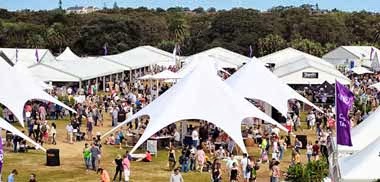
Taste of Sydney is an annual celebration of the diverse and delectable restaurant and food scene in Sydney. The event transforms Sydney's Centennial Park into one of the world’s largest outdoor restaurants. Here you can sample tastes from Sydney’s culinary elite as Sydney’s latest and best restaurants and their chefs cook for thousands of food-lovers over four days. The event also features wines, champagne, beer and produce from more than 120 of Australia's finest boutique producers. Taste of Sydney also presents a line-up of innovative and interactive programs on cooking and dining as well as live entertainment throughout the festival.
For more information: http://www.tasteofsydney.com.au

Aussie Wine Month

National
April
Aussie Wine Month, organised by Wine Australia, is a medley of around 100 events, tastings, promotions and celebrations across the country showcasing Australia’s reputation for producing some of the world’s best wines. The event brings the wine community together to promote the quality, diversity and value of Australian wine and to promote Australia’s internationally renowned wine growing regions. Aussie Wine Month presents a great opportunity to sample Australia’s best, be it a Tasmanian Pinot Noir, Hunter Valley Semillon, Margaret River Cabernet, Yarra Valley Chardonnay or Barossa Shiraz, or another variety from more than 60 designated wine regions across the country.
For more information 
http://www.wineaustralia.com/en/Market%20Development/Market%20Programs/Australia/AU0213%20Aussie%20Wine%20Month.aspx

Tasmania's Taste Festival

Hobart, Tasmania
December
Welcome in the New Year at Tasmania's Taste Festival, the premier event showcasing Tasmanian food and wine held on the Hobart waterfront over the New Year period in January each year. Tasmanian specialities such as fresh seafood, Bruny Island cheese and Bicheno berries are just some of the delights on offer. It is also an opportunity to sample Tasmania’s renowned cool-climate wines, peat-distilled malt whiskies and boutique beers. The festival also showcases a range of international cuisines prepared with fresh Tasmanian produce. The Taste Festival coincides with the finish of the Sydney to Hobart Yacht Race, adding to the festivities.
For more information:
http://www.thetasteoftasmania.com.au

Good Food Moth               


Sydney, NSW
October 
If you think you've missed the biggest food trends of the year, you've got a month to get up to speed. as Australia's largest food festival, the best chefs, restaurants, farmers, wine experts and artisan food producers go on show in Sydney and regional NSW at dinners, lunches, tours, parties across more than 540 event listings. From kitchen gardens to craft beer to food trucks, just about every food trend will be covered in the 540 events. Sydneysiders are invited to enjoy exclusive signature dishes and beverages from The Star’s acclaimed restaurants including Sokyo, Balla and BLACK, whilst meeting some of the world-renowned chefs who create them. 
For more information:
http://www.goodfoodmonth.com


Asian Food Festival

Melbourne, Victoria
September – October
Melbourne dining comes alive with hot and spicy, sweet and sour and all flavours in between at Melbourne's month-long Asian Food Festival. The festival features a program of Asian-style cuisine events across in more than 50 restaurants across Melbourne, as well as Melbourne’s vibrant Chinatown in Little Bourke Street and a number of other venues. Celebrate Melbourne’s multi-cultural heritage with Chinese, Japanese, Korean, Malaysian, Thai and Vietnamese cuisines. There are Asian food themed cruises, progressive dinners, and special tours of the Chinese Museum, along with dance performances and other unique events. Chinatown lights up during the Mid Autumn Lantern Festival.
For more information:
http://www.asianfoodfestival.com.au

Tasmanian Beerfest

Hobart, Tasmania
November
Australia’s largest beer festival transforms the Hobart waterfront into a world of boutique and craft beer each November. It’s not just local Australian beer. Breweries large and small from across Tasmania, Australia and overseas attend to put their best brews on show. Princes Wharf is transformed into a waterfront beer garden for two days of live music and entertainment. Meet the brewers and get tips on beer tasting. Sample excellent craft ciders and local Tasmanian produce. Whether your interest is recreational or professional, the Tasmanian International Beerfest offers a great opportunity to immerse yourself in more than 100 boutique beers.
For more information:
http://tasmanianbeerfest.com.au


Taste of Australia


Australia is home to a wonderful mix of cultures from all over the world and is in reality a multicultural melting pot. Australia cuisine has the most diverse range, quality, and inventiveness than many others in the world as it has been strongly influence by hundreds of different cultures worldwide include english, italian, greek, spanish and many other countries.


The native "Australian" Aboriginals too have influenced culinary Australia with their "Bush Tucker" which means "Australian Food" so when you're planning your Australia visit, prepare yourself for some real Australia food and taste some of the animals that some consider to be the most ultimate food. While travelling through Australia, you will find hotels, cafes, fast food restaurants, bars and fine-dining establishments in which you can enjoy a meal, but wherever you eat, don’t leave the continent without trying these 
Australian foods:                     


Vegemite was invented in Melbourne in 1922 when Australian food manufacturer Fred Walker asked chemist CP Callister to create a product similar to British Marmite. The majority of Australian homes have at least one jar of Vegemite in their pantry. Vegemite is a dark brown Australian food paste made from leftover brewers' yeast extract which is salty, slightly bitter and malty, and rich in umamiIt is a popular spread for sandwichestoastcrumpets and cracker biscuits as well as a filling for pastries


Why not eat the national animal?And no, Australians don’t eat deep-fried koalas.The Aboriginal inhabitants of Australia feasted on kangaroo for centuries and it formed part of their staple diet. It is available today in various cuts and you can even buy kangaroo sausages. 


One of the best know and popular bush foods it is also one of the more elusive of bush tucker . The grub is the larva of a moth and generally only found in central Australia and is a nutty-flavoured bite that has been enjoyed by indigenous Australians for thousands of years.


Pavlova is a common and popular Australian meringue-based dessert with a crisp crust and soft, light inside, topped with whipped cream  and sliced fresh fruit.The dessert is believed to have been created in honour of the dancer either during or after one of her tours to Australia and New Zealand in the 1920s. It is a dessert most identified with the summer time, but is eaten all year round in many Australian and New Zealand homes.


Lamingtons is a squarish piece of sponge cake dipped in chocolate icing and rolled in desiccated coconut. There are many variations of Lamingtons; filled with strawberry jam and whipped cream. Despite its small size, the cake has a large reputation, the little Lamington was inducted into the National Trust of Queensland’s list of Heritage Icons. Since then each year on July 21, Australians celebrate "National Lamington Day."


ANZAC Biscuits are crunchy cookies that usually consist of rolled oats, golden syrup and desiccated coconut. The biscuits were named after the Australian and New Zealand Army Corps. The hardy cookies were made by women during World War I and sent to the ANZACs serving overseas


The Meat Pie is very common (and very self-explanatory). It's a small pie (usually about 4" (9cm) in diameter) filled with ground beef, gravy and covered with "tomato sauce" (which is very similar to ketchup, but not quite as sweet). It is served at "tuckshops" (school canteens) or eaten mainly as a takeaway food.Meat Pies are very popular at sporting events and on construction sites. Generally speaking, it would be very difficult to find an Australian male who disagreed with the sentiment that Meat Pies are about as Australian as you can get.


Another popular tuck shop favourite is the Sausage Roll. It is puff pastry filled with sausage meat that has been spiced with onions and various herbs. Like the meat pie, it is also served with tomato sauce on top. These days the sausage roll is becoming more adventurous with the addition of international flavours such as Moroccan spices or Thai herbs and sauces.


Damper is an another iconic Australian dish. it is a traditional soda bread prepared by swagmendroversstockmen and other travelers. It consists of a wheat flour based bread, traditionally baked in the coals of a campfire.Damper was originally developed by stockmen who travelled in remote areas for weeks or months at a time, with only basic rations of flour, sugar and tea, supplemented by whatever meat was available. Damper was eaten with dried or cooked meat or golden syrup, also known as "cocky's joy".Damper is also a popular dish with Indigenous Australians. Aboriginal women had traditionally made bush bread from seasonal grains and nuts, which they cooked in the ashes of fires.

Australian cuisine is still rapidly developing and it will be of no surprise if pretty soon we will be able to try not only the above-mentioned dishesScience Articles, but also some new ones.


Sunday, 6 October 2013

Discover Tasmania

Planning a holiday? Romantic getaway? Family touring adventure? The question is WHY would Aussies go overseas when Tassie has it all right on their doorstep.

The unique island state of Tasmania officially has the cleanest air in the world. The rainwater is so pure it's harvested and bottled. This, combined with the fertile soil, gives rise to world-renowned produce - yes including those apples, but much more. Locally-grown walnuts, wasabi and cool climate wines all find their way onto local menus; along with fine cheeses, crayfish, oysters and that very famous salmon.
You can travel Tassie your own way and at your own pace: a road trip, camping, cabins, cottages, motorhomes, farmstays,  and self-contained apartments through to luxury 5-star eco-retreats.


What's to see and do? How about impossibly white sandy beaches with turquoise waters, snow-capped mountain peaks, and rustic villages sprinkled throughout a scenic countryside? Then there's hiking through untouched World Heritage wilderness; guided wildlife tours and cruises; or our world-class trout fishery that's frequented by everyone from former Prime Ministers to English rock stars.
 Year-round events and festivals - there's something on almost every week - and some of Australia's best preserved historic sites and colonial heritage. You'll find arts, crafts, rare antiques, elegant vineyards, breweries - all served up in a friendly laidback atmosphere.

Some other interesting trivia:
  • Tasmania named the "Best Temperate Island in the World" twice, by the International travel magazine Condé Nast Traveller
  • Bay of Fires named "the second most beautiful beach in the world" by Condé Nast Traveller; and "the world's hottest travel destination" by 2009 Lonely Planet
  • Tasmania was the most decorated State at the 2009 Gourmet Traveller Awards
  • Pyengana Dairy in Australian Traveller's Top 10 Gourmet Experiences for 2010